The Party of European Socialists (PES) is dissatisfied with the advent of the negotiations of the UN Climate Change Conference ‘COP31’, which ended without consensus on an overarching outcome, falling short of the level of ambition needed to address the climate crisis. At a time when the effects of climate change are increasingly felt across the world, there must be no backtracking on climate commitments, particularly on the phase-out of fossil fuels. At the same time, the European Union must also step up its contribution to climate finance and use its position to push for stronger international action. The work does not stop in Antalya: ahead of COP32, governments must close the gaps left by COP31 and deliver stronger commitments on emissions reductions, adaptation, climate finance and a just transition. To achieve this, the PES calls for greater global ambition on climate action, as well as stronger international cooperation and concrete commitments to match current and future climate challenges, accelerate the green transition, phase out fossil fuels and support the most affected by climate change.
PES President Stefan Löfven said:
“The UN Climate Change Conference carries significant political weight. Every year, countries from all over the world come together to reaffirm their commitment to a better and more equitable future for all. To achieve this, countries must pursue both mitigation and adaptation and, above all, support the most vulnerable countries and communities hit hardest by climate change.
We need a green transition because our societies and economies cannot thrive on a deteriorating planet. And this transition must be fair because people are affected disproportionately, often bearing the consequences of decisions made elsewhere.
This is why we call for global efforts to phase out fossil fuels. Unfortunately, the COP31 decision text places greater emphasis on carbon capture rather than addressing the real issue for a clear decarbonisation roadmap. There must be no backtracking on the commitments made under the Paris Agreement, and countries must now step up their efforts to reduce emissions and accelerate the transition away from fossil fuels. We also call for stronger climate finance commitments. Therefore, the European Union must step up its contribution to finance climate action and do more to meet its responsibilities as one of the world’s largest economic powers and donors. Adaptation finance needs to be tripled to ensure it meets the needs of those most affected. The failure to reach agreement on climate finance at COP31 is deeply concerning and shows that the international community must raise its level of ambition.
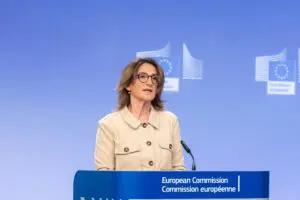
Despite the lack of agreement on a global outcome, references during the negotiations to electrification and investment in renewable energy are welcome. Both are essential for the future. In the European Commission, Executive Vice-President Teresa Ribera and Commissioner Dan Jørgensen are spearheading this work. Decarbonisation and the greening of the wider economy must go hand in hand to make lasting progress.
The absence of a clear pathway towards a just transition is cause for concern. We expected the COP31 negotiations to build on the progress made at COP30 in Belém, where countries acknowledged the need for a Just Transition Mechanism. More needs to be done to support workers and communities and protect human rights as we shift towards clean energy and build climate resilience. Looking ahead to COP32, the priority must be to turn commitments into concrete action: closing the gaps on fossil fuels and finance climate action, strengthening adaptation, and putting workers and communities at the centre of the transition. COP32 must deliver the progress that was missing in Antalya.”
The UN Climate Change Conference COP31 took place in Antalya, Türkiye, from 9 to 20 November 2026, bringing together countries from across the world to negotiate a common response to the climate crisis. While progress was made on a number of separate issues, including through decisions and voluntary commitments, no final outcome was adopted. Failure to reach agreement leaves significant gaps in global climate action, particularly on the phase-out of fossil fuels, climate finance and the just transition. It is now essential that governments, including the European Union, use the year ahead to close these gaps and strengthen their commitments ahead of COP32. For the PES, delivering on the promises of the Paris Agreement requires stronger political commitment and international cooperation, ensuring that the transition is green, fair and just.