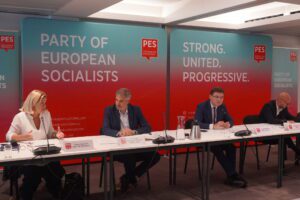
PES ministers met today ahead of the GAC Cohesion Council meeting in Brussels and a few months before the Commission is expected to put forward a proposal on the next EU long-term budget. Cohesion Policy needs a refresh to meet current challenges and deliver on progressive priorities in Europe. But this must not detract from its core objectives of promoting social, territorial, and economic convergence, ministers concluded during the meeting held as hybrid both at the PES headquarters and online.
These two principles should not be pitted against each other. Instead, they go hand in hand for a proactive Europe that works for everyone and in every region – this was the main message of the PES meeting.
Chair of the meeting, Aleksander Jevšek, Slovenia’s Minister of Cohesion and Regional Development, said:
“Citizens find themselves confronted by huge challenges, ranging from rising costs of living to energy poverty, to the effects of climate change, to geopolitical instability. They expect adequate answers from policymakers, and justifiably so.
Among the concerns of citizens is unaffordable housing. We therefore welcome the initiative of European Commissioner for Energy and Housing, Dan Jørgensen, to double the planned cohesion policy investments in affordable housing.
As Socialists and Social Democrats, we are convinced that an ambitious and refined Cohesion Policy is a crucial part of the solution: it strongly contributes to the wellbeing of citizens, the resilience of Europe’s societies, the functioning of the Single Market and Europe’s competitiveness. Let’s not be mistaken: Cohesion Policy is a success story of the EU, and investing €392 billion in cohesion funds in the period of 2021-2027 does indeed make a difference for our citizens.”
Attendees agreed that an updated Policy should include empowering local and regional authorities, the possibility for flexibility in cases of unforeseen events and administrative simplification, while this does not mean deregulation. The same goes for a better alignment with EU priorities serving cohesion objectives, especially housing. At the same time, strengthening EU competitiveness and defence cannot be at the expense of social, territorial and economic cohesion, and a diminution of cohesion funds.
The future Cohesion Policy should come with a strong financial mandate in the next EU long-term budget, built on a bottom-up, place-based and long-term approach. This also means that regions must not be held hostage to deficiencies at national level when funds are disbursed.
Cohesion Policy has always been at the heart of the efforts of European Socialists and Social Democrats. It has been central to the 2024 PES election campaign, followed by a PES Ministers Declaration on the future of Cohesion Policy the same year. Progressives set out to continue their commitment to Cohesion Policy in the upcoming negotiations of the EU’s long-term budget.
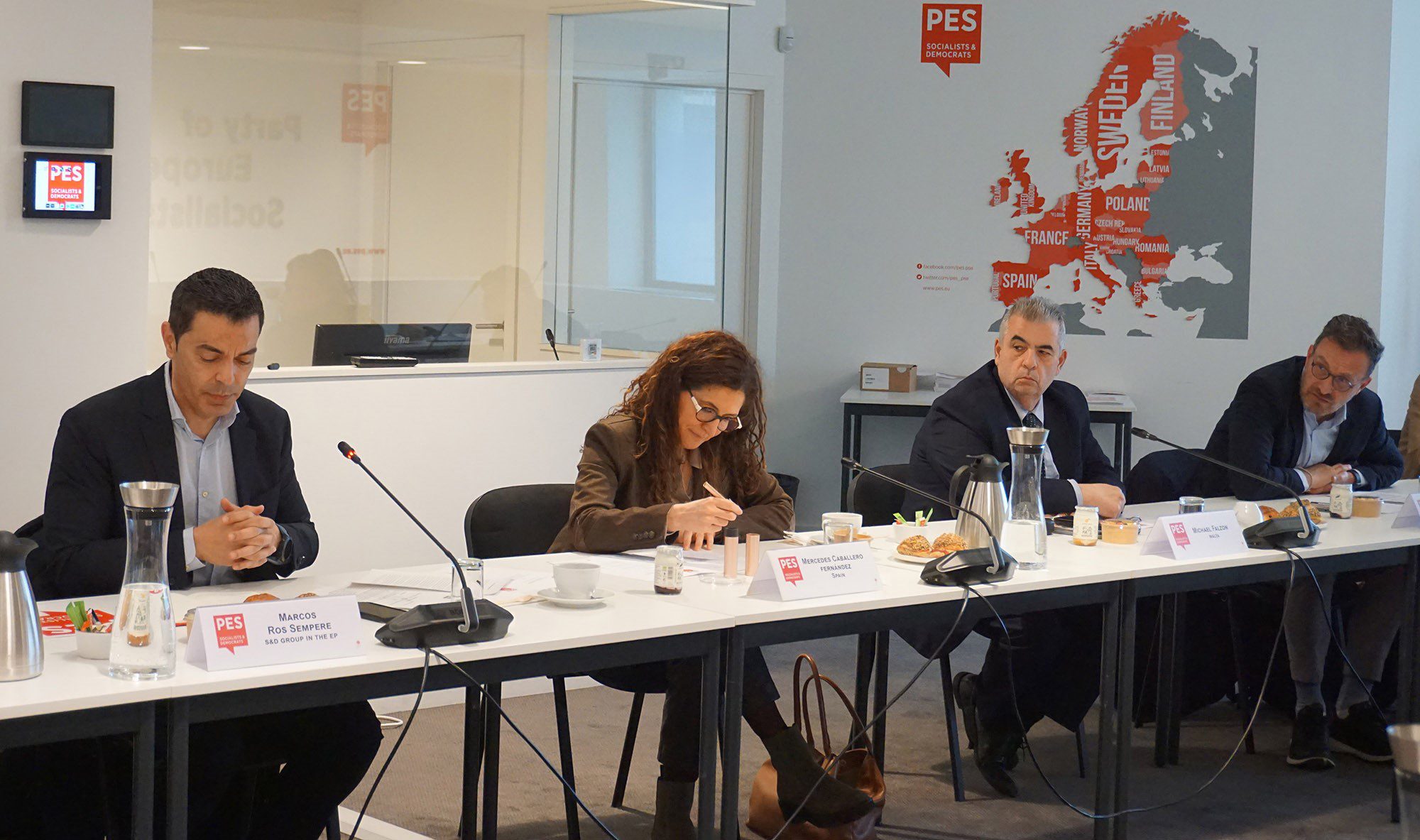
Today’s cohesion ministerial meeting was attended by:
- Aleksander Jevšek,Minister of Cohesion and Regional Development, Slovenia, Meeting Chair
- Michael Falzon,Minister for Social Policy and Children, Malta
- Bogdan-Eduard Simcea, Secretary of State in the Ministry of Investments and European Projects, Romania
- Mercedes Caballero Fernández, Secretary General of European Funds, Spain
- Marcos Ros Sempere, MEP, S&D Coordinator of the EP REGI Committee
- Kata Tüttő, President of the European Committee of the Regions
- Pascal Smet, Member of the European Committee of the Regions, PES Group COTER Coordinator
- Yonnec Polet, Deputy Secretary General, PES