The Party of European Socialists (PES) brought together progressive policymakers and leading experts on artificial intelligence to discuss how Europe can harness the opportunities of Artificial Intelligence (AI) while protecting democracy, fundamental rights, and citizens.
The second PES AI Working Group meeting focused on the growing impact of AI on European societies and democracies, from disinformation and algorithmic amplification to questions of democratic control, European sovereignty, and the future direction of AI policy.
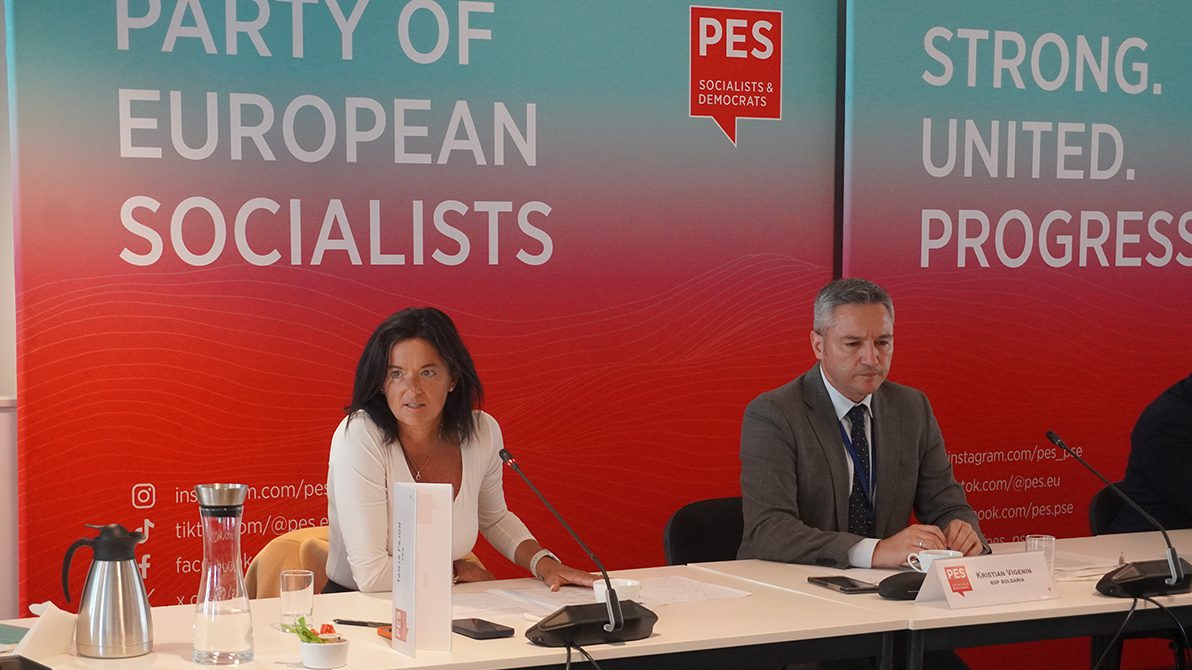
Katarina Barley, chair of the meeting, PES Executive Vice-President, and Vice-President of the European Parliament, said:
“Artificial intelligence will transform our economies and our societies. We cannot leave its future to a handful of powerful companies and CEOs. Their ultimate goal is to push the limits of AI at any cost, treating threats to our democracies, the destruction of the environment, and even the potential extinction of humanity as acceptable externalities.
Contrary to the logic of the global AI race, AI development should not be an end in itself.
We must ensure that AI serves people, not the other way around. We need to understand the risks of AI and hold AI companies accountable, ensuring human control and the protection of fundamental rights and our democratic societies.
Europe has already taken important steps, but as the technology develops, our political ambition must evolve with it.”
Rado Fonda, Director of PollingEurope presented research on citizens’ perceptions of artificial intelligence. The findings point to an important challenge for policymakers: Europeans see opportunities in AI while at the same time expressing strong concerns about who controls the technology and the impact on the job market.
Jan Penfrat, Senior Policy Advisor at EDRi, addressed the impact of AI on civic discourse. He described how AI is increasingly deployed at scale in citizens’ everyday lives, becoming a key gateway through which people access and consume information This allows AI to pre-select information and thereby to shape political debates. Also, AI is used to create misleading content which is spread on platforms distort reality, and spread misleading content that is rewarded by digital platforms in amplifying outrage, manipulation, and polarisation.
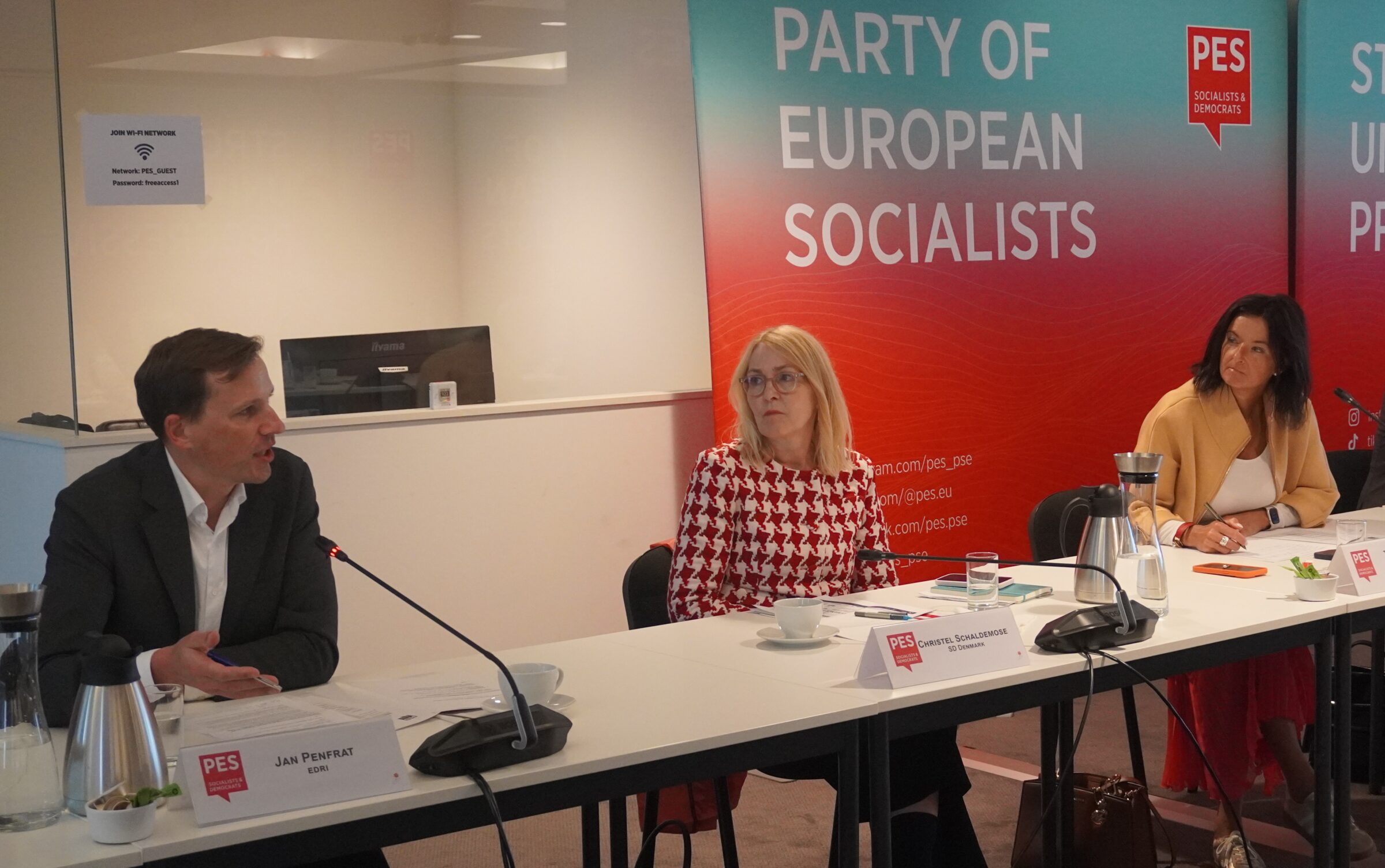
The Working Group also heard from Philip Fox, European AI Policy Lead at the KIRA Center. Discussions focused on how Europe can protect its prosperity, sovereignty, democratic institutions, and citizens as increasingly powerful AI systems develop.
The PES underlined that technological progress cannot come at the expense of people. Decisions over the development, deployment and risks of artificial intelligence cannot be left to markets and geopolitical competition.
The EU AI Act represents an important foundation for European action. Progressives will continue working to ensure that Europe remains ambitious as the technology evolves – promoting innovation while ensuring risk mitigation, defending transparency, accountability, fundamental rights, and democratic control.
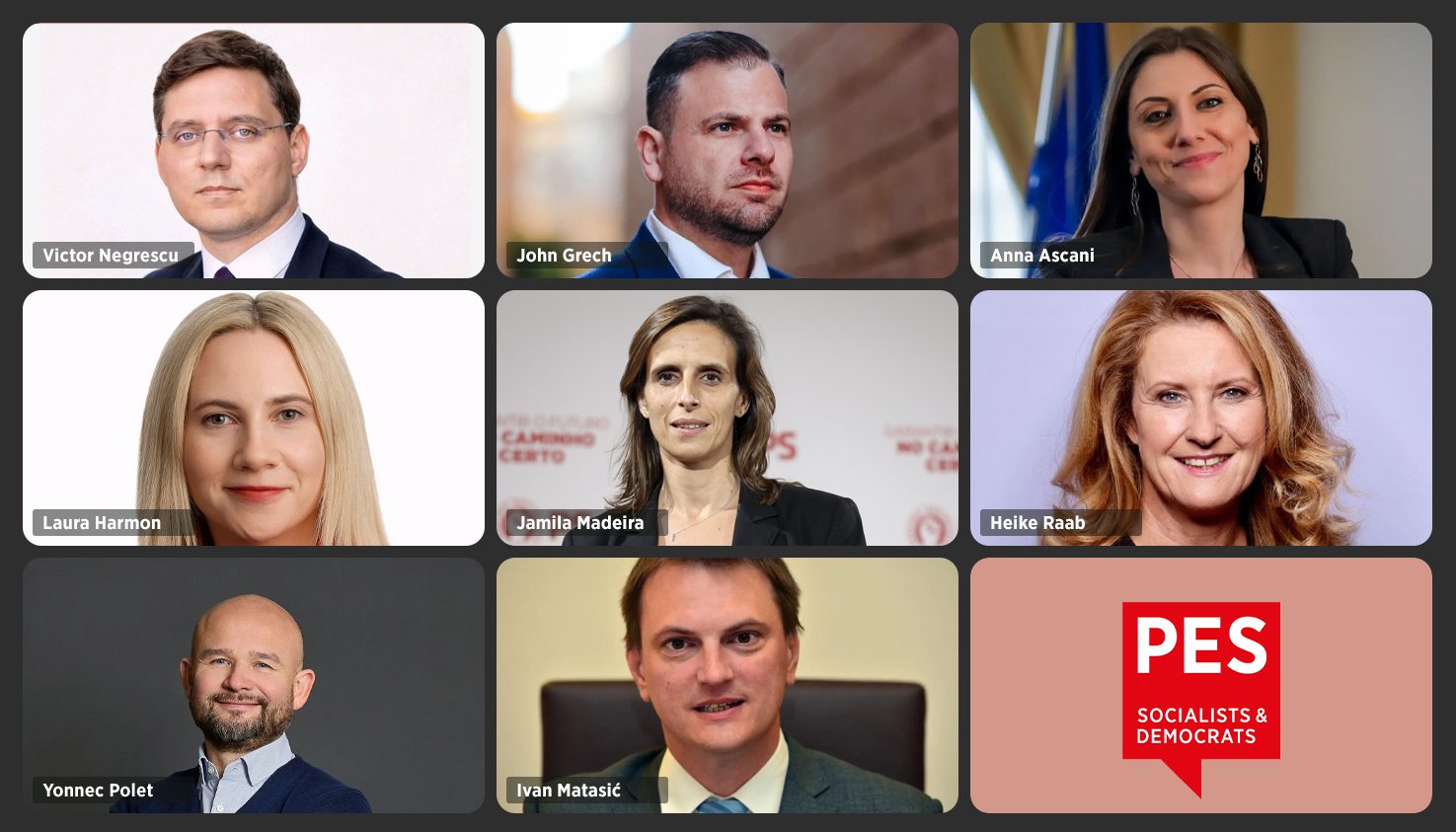
List of participants:
- Katarina Barley — Chair, PES Vice-President
- Yonnec Polet — Deputy Secretary General, PES Deputy Secretary General
- Saar van Bueren — Deputy Secretary General, PES Deputy Secretary General
- Victor Negrescu — PES Vice-President, Vice-President of the European Parliament, Member of the European Parliament
- Tanja Fajon — PES Vice-President
- Philip Fox — European AI Policy Lead, KIRA Center
- Jan Penfrat — Senior Policy Officer, EDRI
- Rado Fonda — Director, PollingEurope
- Sabine Seuss — Policy Advisor of the Parliamentary Group, SPÖ Austria
- Nima Labani — Brussels Region Parliamentary Advisor, PS Belgium
- Daan Schellemans — Policy Adviser, Vooruit Belgium
- Kristian Vigenin — Member of the European Parliament, BSP Bulgaria
- Ivan Matasić — Policy Advisor on Digital Society, SDP Croatia
- Christel Schaldemose — European Parliament Vice-President, Member of the European Parliament, SD Denmark
- Anna Ascani — MP, Vice President of the Chamber of Deputies and Chair of the Parliament’s Committee on Documentation, PD Italy
- Laura Harmon — Senator, Labour, Ireland
- John Grech — Member of Parliament, Partit Laburista, Malta
- Jamila Madeira — National Secretary for International Relations, PS Portugal
- Heike Raab — State Secretary, State Chancellery of Rhineland-Palatinate and President of the CoR SEDEC Commission, CoR, SPD Germany
- Olga Markogiannaki — PES Women Bureau Executive Member, PES Women
- Alexandra Matthys — Education and Lifelong Learning Officer, Solidar+
- Monty Aal — Policy Analyst for Digital, FEPS
- Matteo Dressler — Policy Analyst for democracy and participation, FEPS
- Vanessa Zwisele — Project Officer, FEPS
- Justin Nogarede — Senior Policy Office, FES
- Annika Memmel — Assistant European Parliament, Katarina Barley, S&D Group
- Antoine Mertzeisen — Advisor Cabinet CoR President, Kata Tüttő, Committee of the Regions
- Jens Gustav Aegerup Jensen — Head of Office & Policy advisor to Vice-President Christel Schaldemose, S&D Group
- Linnea Englund Davidsson — Policy Advisor for MEP Adnan Dibrani, S&D Group
- Enzo Grisoni — Policy Advisor for MEP Brando Benifei, S&D Group
- Angelica Da Porto — Policy Advisor for MEP Marc Angel, S&D Group
- Laura Caroli — Policy Advisor, S&D Group
- Maryant Fernández — Policy Advisor, S&D Group
- Louisa Bentley — Assistant, S&D Group
- Katrin Mikolaiczyk — Political Advisor, PES at CoR
- Constantin Kourkoulas — Head of EU Policy Unit, PES
- Rúben Félix — Justice and Home Affairs, Democracy & Horizontal Policies Adviser, PES